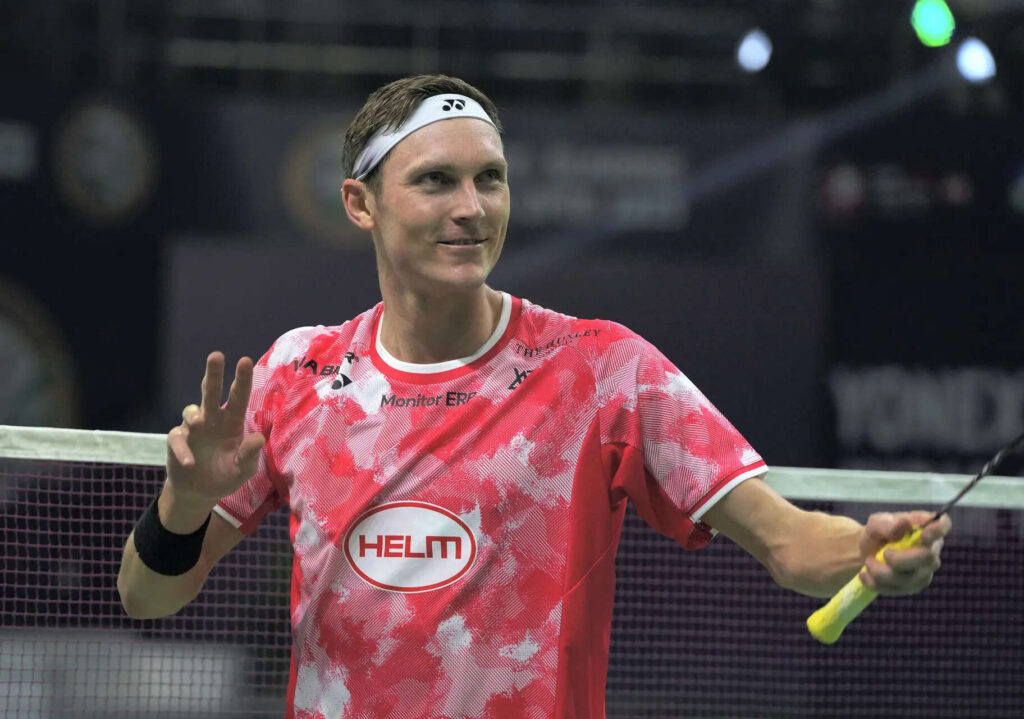
I still remember the first time I saw Viktor Axelsen command the court with a combination of power and calm that felt almost revolutionary. I was covering a tournament for SportsBeatsIndia and the energy in the arena made you believe that badminton had crossed into a new physical era. Today that chapter closes as Axelsen, 32, announces his retirement because of persistent back issues, bringing down the curtain on one of the sport’s most influential careers.
Viktor Axelsen Announces Retirement
Axelsen leaves behind a legacy shaped by two Olympic gold medals and two World Championship titles. As you know, those achievements did more than fill trophy cabinets. They raised expectations about athleticism, conditioning, and tactical intelligence in singles play. His decision to step away for health reasons highlights the toll elite sport takes, especially when back problems interfere with the explosive movements badminton demands.
Career Highlights and Competitive Dominance
Axelsen redefined consistency at the highest level. He won major events on multiple continents and held himself to standards that forced rivals to adapt. I watched him dismantle opponents with steep angles and relentless court coverage, and it became clear that his success was the product of meticulous training and a hunger to evolve the craft. In addition, his resume of Olympic and World titles places him among the all time greats in badminton history.
Raising the Physical Bar for the Sport
Let’s break it down. Axelsen transformed how players prepare physically. Coaches began to emphasize strength, recovery, and biomechanical efficiency because of the way he moved and delivered power from the backcourt. His career showed that elite badminton is as much about load management and rehabilitation as it is about technique. To summarize, his influence changed training protocols worldwide.
Global Reach and Cultural Connection
Axelsen’s influence extended far beyond Denmark. In China and across Asia he built a remarkable rapport with fans, even engaging in Mandarin to connect more personally. That outreach helped grow viewership and inspired a new generation who saw him as both a competitor and an ambassador for the sport. As you know, such cultural bridges are rare and they matter for badminton’s global growth.
Legacy for Players and Fans
In my experience covering sport, retirements like this force a moment of reflection. Viktor Axelsen’s career will be studied by players, coaches, and fans who want to understand how to blend physical supremacy with strategic brilliance. SportsBeatsIndia will continue to track how the landscape shifts in his absence and what lessons emerging players carry forward from his example.