TLDR: If you want to play kabaddi well you need a mix of explosive power, low-body strength, agility and game-specific drills. I share the practical training blocks I used: sprint and plyometric work for explosiveness, lower-body strength and core for tackles and holds, mobility for injury prevention, targeted skill drills (toe touches, chain tackles, ankle holds) and simple nutrition/recovery habits. Follow a 3–6 day plan with progressive overload, practice game scenarios, and avoid overtraining or ignoring mobility.
When I first stepped onto the mat I was fast but soft and would get flattened by experienced defenders. I remember a match where I froze mid-raid because my body couldn’t absorb a hit. That frustration drove me to design a training routine focused on strength, conditioning and practical kabaddi drills. Over seasons of practice and matches I refined what actually transfers to performance. I want to give you that blueprint so you spend time training the right qualities.
Complete Kabaddi Training: Fitness, Strength and Skill Plan
Kabaddi demands unique athletic qualities: short-burst sprint speed, lateral quickness, grip and hip strength, anaerobic capacity and smart body control. However, many new players waste months doing generic cardio or unrelated bodybuilding. To fast-track progress you need targeted exercises, progressive overload, and deliberate practice that simulates match stress.
What is kabaddi training?
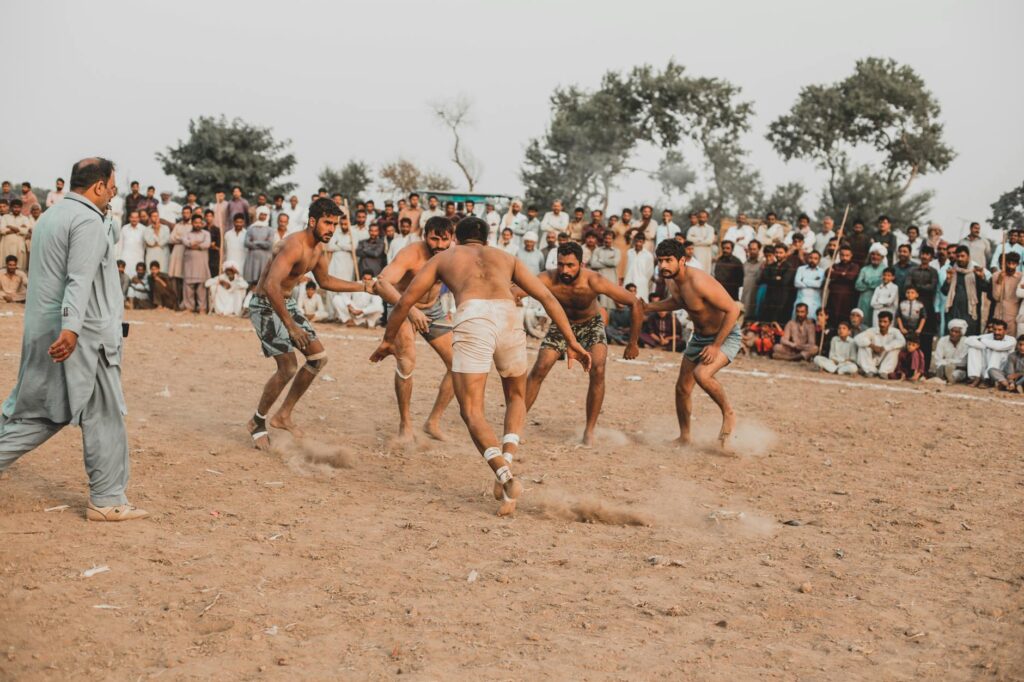
Kabaddi training combines sport-specific skill sessions with strength and conditioning elements. It blends sprint and agility drills, plyometrics for explosive power, resistance exercises for tackling and holds, flexibility and mobility work to stay durable, and tactical practice such as raid timing and defensive coordination. In short, you train your body to move how the sport demands in short, intense bursts with quick recovery between efforts.
Why does kabaddi training matter?
In matches you rarely work at a steady pace; you explode, resist, and recover. Training incorrectly leads to poor power transfer, fatigue in the clutch, and a higher injury risk. As you know, athletes who couple strength with speed and game scenarios win more duels and survive long tournaments. I’ve seen players with raw talent fail because they lacked conditioning or lower-body strength to complete tackles. Good training closes that gap.
Key physical qualities to develop
- Explosive speed: short sprints (5–15 m) and plyometrics.
- Lower-body strength: squats, deadlifts, lunges to create a stable base for tackles and holds.
- Core stability: anti-rotation and anti-extension work to resist tackles and maintain control.
- Grip and upper-body strength: pull variations and farmer carries help in holding opponents.
- Anaerobic endurance: repeated high-intensity efforts with short rests to mimic raids.
- Mobility and flexibility: hips, ankles and thoracic mobility for low stances and dodges.
How to structure your weekly program
Design a phased week balancing skill practice, strength sessions and conditioning. A simple 5-day layout I recommend:
- Day 1: Strength (lower body focus) + mobility
- Day 2: Speed & plyos + skill practice (raids and footwork)
- Day 3: Active recovery or light skill session
- Day 4: Strength (upper body + core) + grip work
- Day 5: High-intensity conditioning + match simulation drills
- Day 6: Team practice or sparring
- Day 7: Rest and recovery
Let’s break it down into components you can apply immediately.
Strength training: exercises that transfer to kabaddi
Focus on compound lifts and sport-specific variations. I prioritize range of motion and speed under load rather than slow bodybuilding reps.
- Back squat or front squat: 3–5 sets of 4–6 reps for strength. Use slightly wider stance to mirror low kabaddi posture.
- Romanian deadlift: 3 sets of 6–8 to build posterior chain strength for explosive pulls.
- Split squat or walking lunge: 3 sets of 6–8 each leg for unilateral strength and balance.
- Trap bar deadlift: alternative for hip drive and safe heavy pulling.
- Pull-ups/chin-ups and bent-over rows: 3 sets of 6–10 for grip and upper-body control.
- Farmer carries and suitcase carries: 2–3 rounds of 30–50 m to improve grip and core endurance.
- Pallof press, dead bug, hanging leg raises: core stability—3 sets of 10–15ish reps.
Explosive training and plyometrics
Explosive power wins raids and escapes. I include short bounding sequences and jumping drills twice a week.
- Depth jumps or box jumps: 3–5 sets of 3–5 reps for reactive force.
- Broad jumps and single-leg bounds: 3 sets of 4–6 for horizontal power that mimics lunging into a raid.
- Medicine ball throws (rotational and chest pass): 3 sets of 6–8 for upper-body explosiveness.
Speed and agility
Sprint mechanics are essential. Short acceleration drills replicate raid bursts and recovery between efforts builds match fitness.
- 10–15 m sprints from various starts: 6–10 reps with full rest.
- Resisted sprints (sleds or band): 4–6 x 10–20 m for accelerating strength.
- Shuttle runs, T-drills and ladder drills for quick feet and change of direction.
Skill drills that matter on the mat
Strength without skill is limited. Practice the moves, timing, and awareness that win points. I recommend daily short skill blocks (20–40 minutes) focusing on technique and reaction:
- Toe touches and dashes: practice the speed, low-center of gravity entries.
- Chain tackle rehearsals: 2-on-1 or 3-on-2 coordination to learn positioning.
- Ankle hold and thigh hold drills: partner resistance at increasing intensity.
- 1v1 and 2v2 live reps: simulate pressure situations with scoring rules and short breaks.
While you develop, occasionally watch footage and analyze choices. In addition, practice breathing and composure under fatigue—game IQ separates good from great.
Conditioning: simulate the energy demands
Kabaddi matches require repeated all-out efforts with short rest. Train anaerobic repeatability rather than long slow runs.
- Repeated sprint ability (RSA): 6–8 x 20 m sprints with 20–30 seconds rest.
- Interval circuits: 30 seconds max effort (tire flips, burpees, sled pushes) then 30 seconds rest x 8–10 rounds.
- Short bouts of mat-specific drills: 20–30 second raids followed by 30–45 second recovery to mirror game rhythm.
Mobility and injury prevention
Soft tissue quality and joint mobility keep you available. I spend 10–15 minutes daily on targeted mobility.
- Hip opening flows and 90/90 rotations.
- Thoracic rotations and band pull-aparts to maintain upper-body position.
- Ankle mobility drills and calf stretches to support low stances.
- Prehab for knees and shoulders using light eccentric work and banded exercises.
Nutrition and recovery basics
Fueling and sleep matter as much as training. From experience, I advise simple, consistent habits that support performance.
- Protein target: aim for 1.6–2.0 g/kg body weight daily to support recovery.
- Carb timing: prioritize carbs around training sessions for intensity and glycogen restoration.
- Hydration and electrolytes during long sessions.
- Sleep: 7–9 hours nightly for hormonal balance and recovery.
Common mistakes to avoid
What should you avoid? Here are the pitfalls that slowed my progress and I see in others:
- Overemphasizing long-distance running instead of short, intense efforts.
- Ignoring unilateral strength—imbalances make injuries more likely.
- Training heavy without speed—strength must transfer to quick movements.
- Skipping mobility and recovery—you’ll be powerful but brittle.
- Practicing skills without intensity—only high-quality live reps translate to matches.
Sample 8-week progress plan
Progressive overload matters. Increase load or intensity each week while keeping one week lighter every 4th week. A sample microcycle in week 1 vs week 6:
- Week 1: Strength 3×5 squats at moderate weight, 6 x 15 m sprints, plyos low volume.
- Week 6: Strength 4×4 squats at heavier weight, 8 x 15 m resisted sprints, higher plyo intensity with single-leg bounds.
Monitor fatigue, adjust volume, and prioritize technique on all lifts and drills.
Equipment and gear recommendations
You don’t need fancy gear. Minimal equipment lets you focus on movement quality. If you want a guide to what matters check resources on equipment of kabaddi and keep these basics:
- Grippy shoes that allow low stances and quick direction changes.
- Resistance bands and a sled (or improvised resistance) for sprint work.
- Medicine ball, plyo box and kettlebell for explosive training.
- Good mat time with partners and a coach for technical refinement.
For fundamentals about the sport itself and rules, many players first read what is kabaddi to ensure their training matches game demands.
How to transition from recreational to competitive
If you’re aiming higher, make your training measurable. Track sprint times, vertical or broad jump distances, and strength numbers. Join local tournaments and focus on consistent performance rather than one-off heroics. A useful step is to study pathways like how to become a kabaddi player to understand selection criteria and institutional support.
Frequently Asked Questions
Can I start kabaddi training at age 20 or older?
Yes. Skill, strength and conditioning can improve substantially in your 20s. You should prioritize mobility and recovery as you adapt to heavy sessions. In addition, structured practice and consistent strength work will give you the best chance to compete.
How many days per week should I practice?
It depends on your experience. Beginners can start with 3–4 focused sessions including 2 skill blocks and 1–2 strength/conditioning days. Intermediate and advanced players often train 5–6 days, mixing team practice, strength work and recovery protocols.
What lifts are most important for kabaddi?
Compound lower-body lifts such as squat variations and deadlifts, single-leg work like split squats, and core anti-rotation exercises are the highest transfer lifts. Upper-body pulling strength and grip work are also important for holding opponents.
How should I warm up before a match?
Do a progressive warm-up: light aerobic movement, dynamic mobility for hips and ankles, activation drills (banded glute work), movement prep (short accelerations and lateral shuffles) and 2–3 practice raids at 50–70 percent intensity to prime the nervous system.
How quickly will I see results?
You’ll notice improved explosiveness and recovery in 4–6 weeks with consistent training; strength gains can come in 6–12 weeks. Skills improve continuously when you practice live drills under pressure.
To summarize
Kabaddi requires a specific blend of speed, strength, mobility and skill. Train explosiveness, build a durable lower body and core, practice game-like situations, and prioritize recovery. Avoid generic long-distance cardio and unstructured lifting. Implement progressive overload and measure your progress. With deliberate practice you’ll feel stronger in tackles, faster in raids, and more confident on the mat.
If you want, tell me your current routine and I’ll tailor a 6-week plan that fits your schedule and goals.

Sports Beats India is a website that covers all the latest sports news from India. We provide comprehensive coverage of all the major sports including cricket, football, hockey, tennis and more. We also have a dedicated team of writers who provide expert analysis and opinion on all the major sporting events taking place in India.