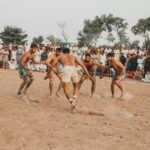
Kabaddi, often referred to as the “game of the masses,” is a high-intensity contact sport that demands a blend of physical prowess, strategy, and quick thinking. While it may be a familiar sight in contemporary sports arenas, the history and origin of kabaddi remain lesser-known aspects. This article aims to shed light on the intriguing past of this sport, offering you a glimpse into its cultural relevance and evolution.
A Glimpse into the Ancient Roots
In this section, we’ll travel back in time to explore the ancient roots of kabaddi.
Kabaddi’s origins can be traced back to ancient India, where it was known by various names, such as “Hu-Tu-Tu” and “Chu-Pa-Ra.” This sport was not merely a game but a form of physical exercise that played a pivotal role in warrior training. Warriors practiced kabaddi to enhance their strength, agility, and combat skills, making it an integral part of their daily routine.
The Evolution of Kabaddi
As we move forward in our exploration, let’s delve into the evolution of kabaddi.
Over the centuries, kabaddi underwent significant transformations. It transitioned from a training exercise for warriors to a competitive sport played in villages and towns across India. The game’s popularity grew rapidly, and it started gaining recognition as a formal sport.
Kabaddi’s Cultural Significance
Now, let’s shift our focus to the cultural significance of kabaddi.
Kabaddi became deeply ingrained in the cultural fabric of India. It was not only a sport but also a source of entertainment and community bonding. Villages would organize kabaddi tournaments during festivals, drawing large crowds and fostering a sense of unity among participants and spectators alike.
Spread Beyond Borders
Kabaddi’s journey didn’t stop within India’s borders. It gradually made its way to other countries.
In the early 20th century, kabaddi was introduced to countries like Bangladesh, Pakistan, and Nepal. It gained international recognition and started making appearances at multi-sport events like the Asian Games. The sport continued to evolve, adapting to international standards while retaining its unique charm.
Kabaddi in the Modern Era
As we approach the present day, let’s discuss kabaddi’s status in the modern era.
Today, kabaddi enjoys a global following, with professional leagues, international championships, and enthusiastic fan bases. It has transcended cultural boundaries, becoming a symbol of strength, determination, and sportsmanship.
FAQs
Q: Is kabaddi a physically demanding sport?
Q: When was the first kabaddi tournament held?
Q: Are there different variations of kabaddi?
Q: What are the key rules of kabaddi?
Q: Is kabaddi an Olympic sport?
Q: How can I learn to play kabaddi?
Conclusion
In conclusion, the history and origin of kabaddi are as fascinating as the sport itself. From its ancient roots in warrior training to its global recognition in the modern era, kabaddi has come a long way. It’s not just a game; it’s a testament to the enduring spirit of competition and cultural heritage. So, the next time you watch a thrilling kabaddi match, remember the incredible journey that has brought this sport to where it is today.
That’s all! You can also checkout: What are the measurements of Kabaddi? and What are some unknown facts about kabaddi?