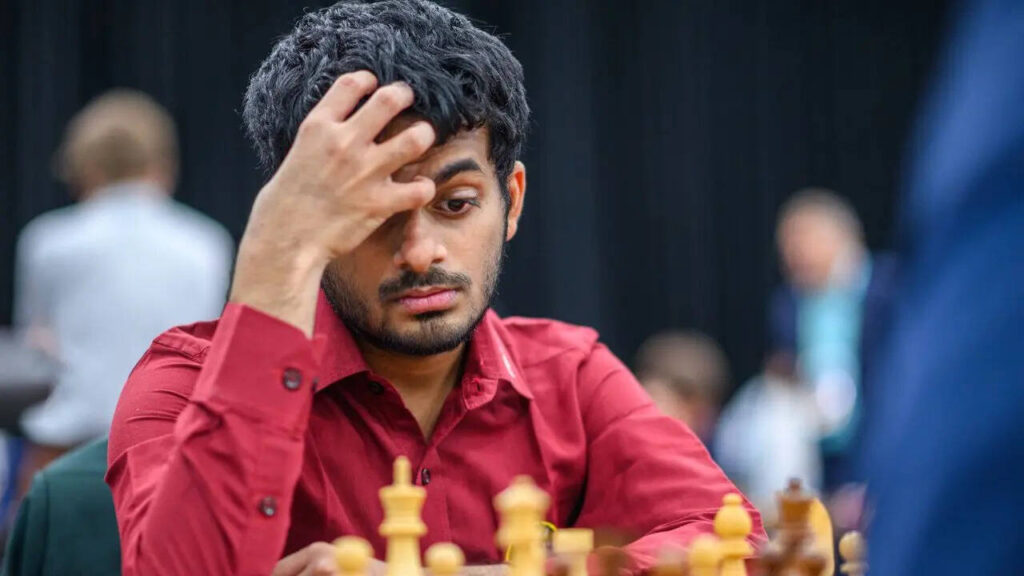
I remember watching Nihal Sarin on my laptop early this year when an online opponent flashed a rude gesture. I felt the moment could have derailed a young talent, but Nihal looked past the noise and focused on the sixty-four squares. As someone who follows Indian chess closely for SportsBeatsIndia, that steadiness stayed with me and later proved prophetic.
From a flash of frustration to a run of quiet confidence
However, the middle finger incident did not define Nihal. As you know, he returned to the board with renewed concentration, and his results followed. In addition to steady tournament play, Nihal surged to a career-high rating of 2723. Let’s break it down: he won the Menorca Masters with mature positional understanding and tactical clarity, and he has beaten D Gukesh twice in high-profile games, a rare double that underlines his rise among elite Indian players.
The middle finger moment and mental toughness
I watched Nihal treat that episode like a small distraction rather than a crisis. He maintained composure, focused on opening preparation, time management, and psychological resilience. To summarize, his reaction offered a blueprint for how top players manage online hostility in rapid and classical formats alike.
Surge in form: rating 2723 and the Menorca triumph
Nihal’s jump to 2723 did not happen by accident. He combined deeper opening work with sharper endgame technique. At the Menorca Masters he converted small advantages with clinical precision, turning seemingly equal positions into wins. In addition, the tournament victory brought tangible confidence that translated into more consistent performance across events.
Beating Gukesh twice and the changing Indian chess landscape
Defeating D Gukesh twice helped place Nihal firmly in world-class conversations. Those wins showed his ability to outprepare rivals and to capitalize on momentary inaccuracies. As a reader of SportsBeatsIndia, you can appreciate how this intra-country rivalry pushes both players forward and raises standards for Indian chess globally.
What comes next: Esports World Cup 2026 and beyond
Nihal now aims to qualify for the Esports World Cup 2026, and his recent form makes that a realistic target. I expect him to keep blending online speed with over-the-board depth, while refining repertoire and psychological readiness. In addition, continued exposure to elite opposition will sharpen his instincts and help him sustain momentum into major events.
To summarize, the journey from a middle finger moment to double over Gukesh reflects growth, resilience, and ambition. Nihal Sarin’s next steps matter to Indian chess fans and to anyone tracking the sport’s evolving competitive scene.